
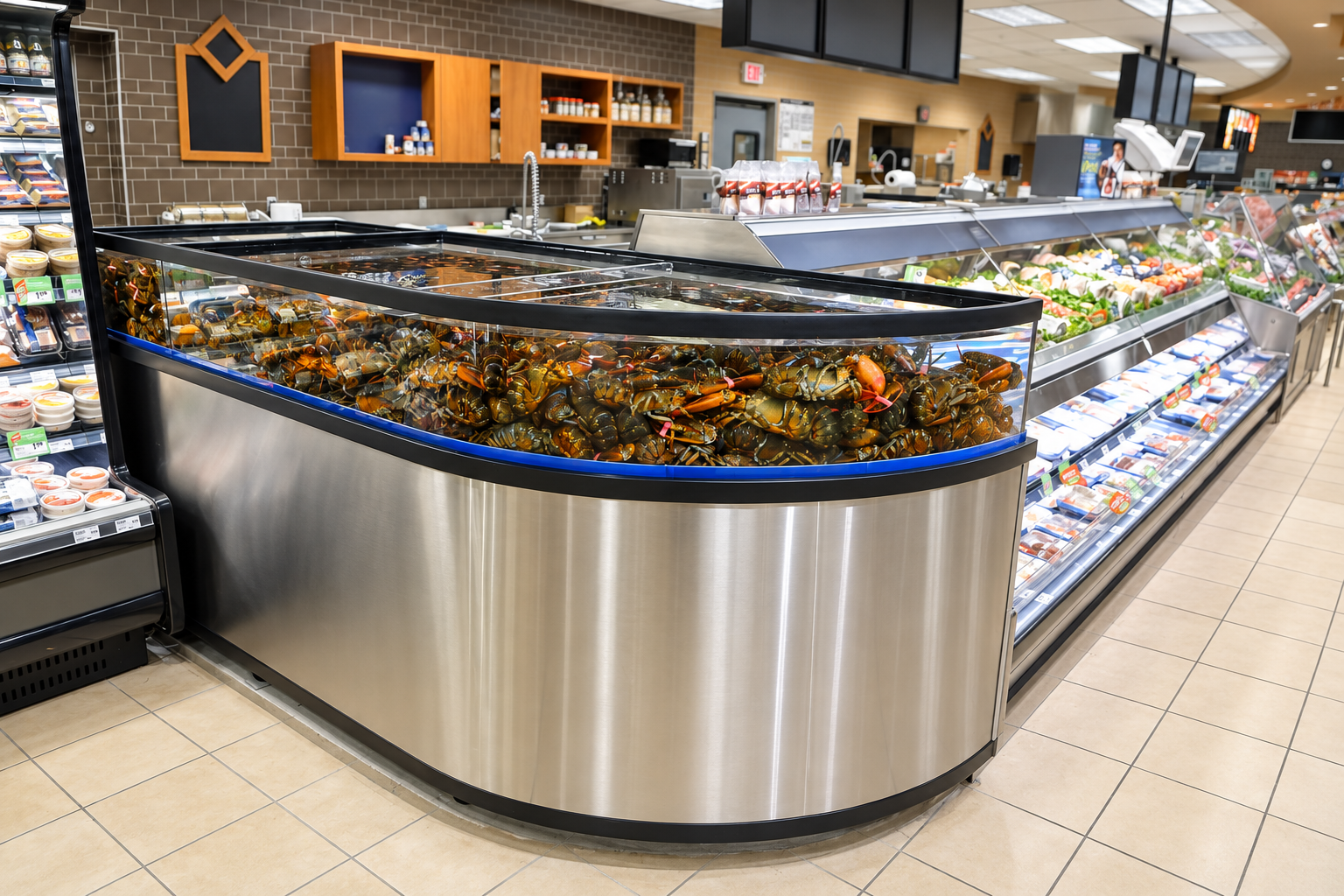
When a lobster delivery arrives, it can be tempting to place them directly in the holding tank. However, a few preparation steps can help reduce the dirt and waste introduced into the tank water.
Purging is part of this routine. Carried out in a separate container, it allows lobsters to release some of their waste before entering the holding tank. For fish market or restaurant staff, making this a regular part of receiving each delivery helps preserve water quality.

Why Purge Lobsters Upon Arrival?
Lobsters may release waste when returned to water after transport. If this happens directly in the display tank, that waste ends up in the same water as the lobsters already there.
Purging in a separate container allows some of this waste to be collected outside the system. The water is then discarded rather than poured into the holding tank.
This preparation helps reduce the load on the filtration system. However, it does not replace tank maintenance or water quality checks. An overcrowded tank or poorly maintained filtration system can still cause problems.
Prepare the Equipment Before You Begin
Good organization makes the job easier, especially when a delivery arrives during a busy period. Before handling the lobsters, prepare your workspace and gather the necessary equipment.
You will need:
- A large, clean plastic container reserved for this task that has never been used to store chemicals.
- A second clean container for draining.
- Marine salt formulated for lobster holding tanks.
- A thermometer.
- A suitable instrument for checking the water’s salinity or specific gravity.
- A timer to follow the recommended durations.
The containers must be free of soap, detergent, or disinfectant residue. Set them up where you can work comfortably and collect runoff without wetting the walkway.

Prepare Suitable Water for the Lobsters
Prepare the purging water before placing the lobsters in it. Use water suitable for your system and marine salt formulated for keeping marine animals, following the manufacturer’s instructions.
For the method described here, prepare cold water between 45 et 55 °F, or approximetaly 7 à 13 °C. Also check the recommendations for your specific equipment and avoid sudden temperature changes during transfers.
Dissolve the salt completely, then test the water with your measuring instrument. If your AQUA instructions specify a specific gravity of 1.024, check that value on the corresponding scale. It does not mean you should add 1.024 grams of salt per litre.
A mark inside the container can help you prepare the same volume of water each time. It makes dosing easier but does not replace testing the water before use.
Soak the Lobsters in a Separate Container
Gently place the live lobsters in the prepared saltwater container. Work in batches suited to the container’s size to avoid overcrowding.
For the method described here, soak the lobsters for 15 to 20 minutes. Use a timer and stay nearby to monitor them throughout the process.
This time in the water allows some waste to be collected before the lobsters enter the holding tank. It should not be considered a complete emptying of their digestive system.
Keep the purging water separate from the display tank water. Once the process is complete, discard it—do not pour it into the holding tank.
Allow Time for Draining
After soaking, transfer the lobsters to the second clean container, without water, and allow them to drain for 15 to 20 minutes, following the procedure for your system.
This step allows runoff to be collected before the final transfer. Keep the container in a cool place, away from sunlight and heat sources, and avoid unnecessarily extending the waiting period.
Prepare the holding tank during this time so the lobsters can be placed in it as soon as the process is complete. A well-organized routine reduces handling and delays between steps.

Place the Lobsters in a Holding Tank That Is Ready to Receive Them
Before transferring the lobsters, check that the holding tank is working properly. The temperature, salinity, water circulation, and filter condition should meet the recommendations for your equipment.
Place the lobsters in the tank one at a time, without dropping them. Hold them securely around the carapace, behind the claws, and avoid lifting them by their claws or legs.
Use this opportunity to check their condition. Never place a dead lobster in the tank. Assess any injured or severely weakened lobster according to your receiving procedure.
Also respect the tank’s stocking capacity. If the system has just been started, follow the gradual stocking guidelines to allow the biological filtration to become established.
Maintain Good Practices After Purging
Purging is a preparation step. Maintaining the lobsters in good condition then depends on daily monitoring of the holding tank.
Observe the lobsters, promptly remove any that have died, and check the water parameters according to your user guide. Keep the mechanical filters clean and follow your system’s maintenance schedule.
Purging does not stop lobsters from producing waste during their time in the tank. Monitoring ammonia and ensuring the filtration system works properly therefore remain essential.
A written procedure kept near the tank also helps staff follow a consistent routine. It can outline the equipment needed, measurements to check, timing, and steps to follow for each delivery.
A Simple Routine to Better Prepare Each Delivery
Taking the time to prepare lobsters before placing them in the holding tank helps reduce the waste introduced into the water. With dedicated equipment and a procedure familiar to the team, this step can easily become part of the receiving routine.
At Développement Aqua Inc., we can help you operate and maintain your lobster holding tank. Whether you have questions about purging, water preparation, or filtration, our team can provide guidance tailored to your equipment and needs.